
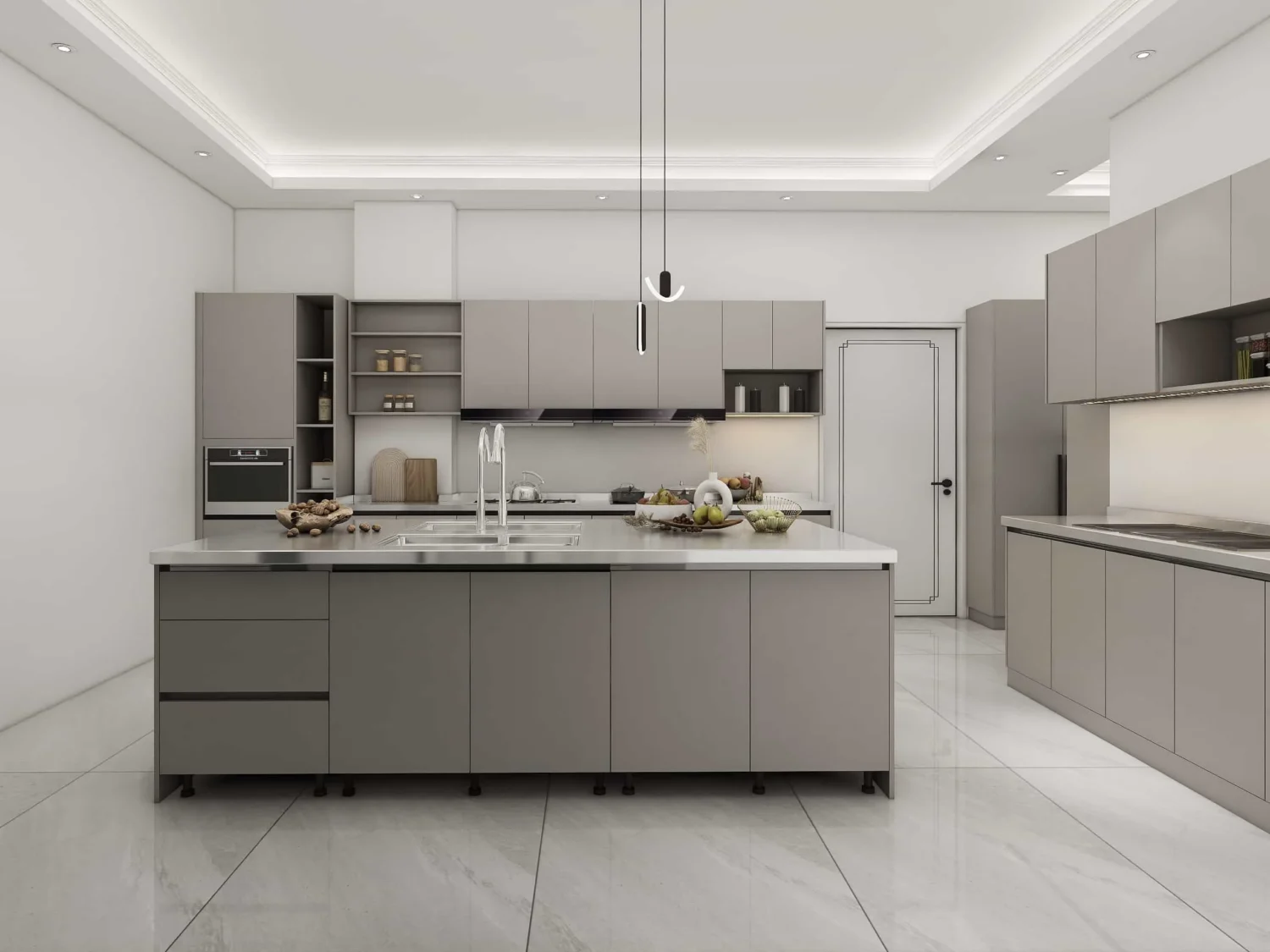

Kitchen cabinets set the visual baseline for your entire home culinary space while providing essential storage and organization. Because cabinetry represents one of the largest financial investments in any kitchen renovation or new build, selecting the right cabinet styles, materials, construction methods, and door profiles requires careful research. Understanding the key differences across cabinet construction types, door styles, wood species, and finishing options allows homeowners to make informed choices that balance long-term durability with personal aesthetic preferences.
The Three Primary Cabinet Construction Grades
Before choosing door styles or paint colors, you must understand how cabinets are manufactured and categorized by quality grade. Cabinets fall into three distinct production tiers, each offering different levels of customization, lead times, and price points.
Stock Cabinetry
Stock cabinets are mass-produced in standardized dimensions and stored in warehouses for quick delivery or off-the-shelf purchase at home improvement stores.
-
Sizing and Flexibility: Manufactured in standard three-inch increments, typically ranging from 9 inches to 48 inches in width. Options for custom heights or unusual angles are unavailable.
-
Materials: Commonly built from particleboard or medium-density fiberboard coated with laminate or thin wood veneers to keep manufacturing costs low.
-
Pros and Cons: Stock options are the most affordable and readily available choice, making them popular for quick renovations or budget-conscious projects. However, limited sizes can lead to wasted dead space that requires filler strips to bridge gaps between cabinets and walls.
Semi-Custom Cabinetry
Semi-Custom cabinetry begins with standard box structures, but allows homeowners to alter dimensions, door styles, finishes, and interior organization features according to specific design needs.
-
Customization Range: Manufacturers can modify cabinet depths, alter drawer configurations, add custom trim molding, or incorporate built-in organizer inserts such as spice racks and tray dividers.
-
Material Quality: Built using higher-grade materials, such as furniture-grade plywood cabinet boxes paired with solid hardwood door frames.
-
Pros and Cons: Semi-custom cabinets offer a strong compromise between cost and flexibility. Lead times generally range from four to eight weeks, but the finished product fits the kitchen footprint far better than stock alternatives.
Custom Cabinetry
Custom cabinetry is built completely from scratch by professional cabinetmakers or specialized manufacturing shops according to exact architectural plans and precise measurements.
-
Design Freedom: There are virtually no restrictions on size, shape, material, finish, or interior hardware features. Custom cabinets can accommodate slanted ceilings, unusual room geometries, and highly specialized built-in appliances.
-
Superior Craftsmanship: Built using premium solid hardwoods, heavy-duty full-extension drawer glides, and hand-applied multi-step finishes.
-
Pros and Cons: Custom cabinetry commands the highest price point and requires longer lead times, often extending from eight to sixteen weeks or more. However, it provides unmatched craftsmanship, precise structural fit, and maximum longevity.
Framing Types: Framed vs. Frameless Cabinets
The structural box of a cabinet comes in two primary architectural designs: framed construction and frameless (European-style) construction. This structural choice affects accessibility, interior storage volume, and visual style.
Framed Cabinetry
Framed cabinetry features a solid wood face frame attached to the front edges of the cabinet box. The door hinges mount directly onto this face frame.
-
Traditional Aesthetic: The presence of the face frame creates a classic, sturdy look commonly found in traditional and transitional American homes.
-
Structural Rigidity: The face frame adds structural stiffness to the cabinet box, making framed units resilient during installation and long-term heavy use.
-
Overlay Variations: Framed cabinets accommodate three distinct door overlay styles: full overlay (doors cover almost the entire frame), partial overlay (doors leave one to two inches of frame visible), and inset (doors sit completely flush inside the frame opening).
Frameless (European-Style) Cabinetry
Frameless cabinetry eliminates the front face frame entirely. The cabinet doors attach directly to the inside sidewalls of the cabinet box using hidden adjustable hinges.
-
Modern Clean Lines: Without a face frame, door seams sit extremely close together, creating a smooth, continuous surface ideal for contemporary and minimalist kitchen designs.
-
Maximized Interior Space: Eliminating the frame removes the internal lip, allowing wider drawer boxes and uninterrupted access to full cabinet interiors. Roll-out trays and large cookware fit inside with zero wasted width.
-
Precision Installation: Because gaps between doors are minimal, frameless cabinets require perfectly level walls and floor surfaces during installation to maintain straight door alignment.
Popular Cabinet Door Styles
The door profile is the most prominent visual feature of any kitchen cabinet. Selecting a door style sets the decorative tone for the entire room.
Shaker Style
Shaker doors are the most popular door style in residential kitchen design due to their clean versatility.
-
Design Features: A simple five-piece construction consisting of a flat recessed center panel surrounded by a clean rectangular outer frame with square edges.
-
Versatility: Shaker doors complement almost any kitchen aesthetic, seamlessly transitioning from traditional farmhouse layouts to sleek modern environments depending on hardware and paint selection.
Slab or Flat-Panel Style
Slab doors feature a single solid, flat piece without panels, frame molding, or decorative bevels.
-
Design Features: Smooth, minimalist surfaces that emphasize natural wood grain, high-gloss lacquers, or sleek matte laminate finishes.
-
Best Fit: Ideal for contemporary, mid-century modern, industrial, or European minimalist kitchen concepts. Slab doors are also simple to clean because they lack crevices where dust and grease accumulate.
Raised Panel Style
Raised panel doors feature a central panel that is elevated or carved, sloping down toward the outer frame perimeter.
-
Design Features: Intricate profile cuts, decorative arch tops, or detailed step moldings that add visual depth and traditional elegance.
-
Best Fit: Suited for formal, traditional, Mediterranean, or colonial kitchen spaces that highlight ornate woodworking and classic architectural detailing.
Beadboard Style
Beadboard doors incorporate vertical wooden planks with narrow, rounded grooves cut between each board within the center panel.
-
Design Features: Distinct vertical linear texture that evokes a cozy, hand-crafted, cottage feel.
-
Best Fit: Excellent for coastal, rustic, cottage, or vintage farmhouse kitchen themes.
Material Options and Finishes
Cabinet longevity and visual texture depend heavily on the underlying materials and protective finishes applied during manufacturing.
Popular Hardwood Species
-
Maple: A dense, light-colored hardwood with a smooth, subtle grain pattern. Maple is the preferred wood for painted cabinets because its smooth surface takes paint without showing wood texture beneath.
-
Oak: Known for prominent, open grain lines and exceptional structural durability. Red oak offers traditional warm warmth, while white oak provides clean, straight grain patterns highly favored in modern and Scandinavian kitchens.
-
Cherry: A premium hardwood characterized by rich reddish undertones that naturally darken and deepen with exposure to sunlight over time.
-
Walnut: A luxurious dark wood with complex, swirling grain lines that range from chocolate brown to deep amber. Walnut is frequently finished with clear coats to highlight its natural beauty.
Engineered Wood Products
-
Plywood: Constructed from multiple layers of wood veneers glued together in alternating grain directions. Plywood offers high resistance to moisture warping and exceptional screw-holding power, making it the top material choice for cabinet box construction.
-
Medium-Density Fiberboard: Made from compressed wood fibers mixed with resin under heat and pressure. Fiberboard provides an exceptionally smooth, uniform surface that does not expand or contract with humidity shifts, making it an excellent core material for painted cabinet doors.
Cabinet Finishes
-
Paint: Delivers opaque color that covers natural wood grain entirely. Crisp whites, deep navy blues, forest greens, and soft greys remain timeless painted finish choices.
-
Stain: Penetrates the wood surface to protect the material while highlighting natural grain patterns and organic color variations.
-
Laminate and Thermofoil: Synthetic plastic or vinyl coatings applied over engineered wood cores under heat and pressure. These finishes offer high moisture resistance and budget-friendly durability in modern matte or high-gloss colors.
Interior Hardware and Functional Storage Enhancements
A truly functional kitchen relies on high-quality internal hardware and customized storage solutions that keep clutter off counter surfaces.
-
Soft-Close Hinges and Glides: Fully concealed, multi-directional adjustable hinges and undermount drawer slides equipped with pneumatic soft-close dampers prevent doors and drawers from slamming shut.
-
Deep Drawer Systems: Replacing lower base cabinets with wide, deep drawers provides far better ergonomic access to heavy pots, pans, and small counter appliances without requiring you to kneel on the floor to reach items in the back.
-
Corner Pull-Out Solutions: Modern blind corner pull-outs and kidney-shaped Lazy Susans transform awkward, dark corner spaces into fully accessible storage shelves.
-
Integrated Waste and Recycling Centers: Double pull-out trash and recycling bins mounted inside base cabinets near the main prep zone keep waste concealed and odor-free.
Frequently Asked Questions
What is the difference between full overlay, partial overlay, and inset cabinet doors?
Full overlay doors cover almost the entire face frame of the cabinet, leaving only a tiny fraction of an inch of frame visible between doors. Partial overlay doors leave one to two inches of the face frame visible around each door panel, creating a traditional segmented look. Inset doors sit flush inside the face frame opening rather than resting on top of it, requiring precise craftsmanship and custom fitting.
Why is plywood generally preferred over particleboard for cabinet boxes?
Plywood is lighter, stronger, and significantly more resistant to moisture damage than particleboard. When exposed to plumbing leaks or steam, particleboard tends to swell, sag, and lose structural integrity, whereas plywood holds its shape and retains screw fasteners far better over decades of heavy daily use.
How do you clean and maintain painted kitchen cabinets without damaging the surface finish?
Clean painted cabinets using a soft microfiber cloth dampened with warm water and a few drops of mild dish soap. Wipe down cabinet faces regularly to remove cooking grease and food splatters. Avoid abrasive scrub pads, bleach, ammonia, or harsh chemical cleaners, as these strip away clear topcoats and dull the paint sheen.
Are dark painted cabinets harder to maintain than light or white painted cabinets?
Dark painted cabinets in navy, charcoal, or black show dust, fingerprints, water spots, and dried flour dust more prominently than white or light grey cabinets. However, light cabinets tend to show grease splatters, food stains, and edge wear near handles more easily, meaning both light and dark finishes require consistent cleaning care.
What is the average lifespan of well-constructed residential kitchen cabinets?
High-quality semi-custom or custom solid wood cabinets with plywood box construction last between 20 and 50 years with basic care. Lower-grade stock particleboard cabinets typically show noticeable wear, hinge sagging, and veneer peeling within 10 to 15 years under active family use.
Can you convert standard lower base cabinet shelves into functional roll-out drawers later?
Yes, aftermarket roll-out wooden trays and wire basket organizers can be retrofitted into existing base cabinet shelf cavities. Measure interior box dimensions carefully to ensure slide clearances, or order custom-sized retrofitting kit boxes that screw directly into the cabinet bottom or side walls.
How do soft-close drawer glides work, and can they be adjusted if doors become misaligned?
Soft-close drawer glides use internal hydraulic or pneumatic dampers that catch the drawer box an inch or two before full closure, gently pulling it shut without noise. Most modern concealed European hinges feature three small adjustment screws that allow homeowners to shift door alignment up, down, left, right, forward, or backward using a standard screwdriver.
Comments are closed.