
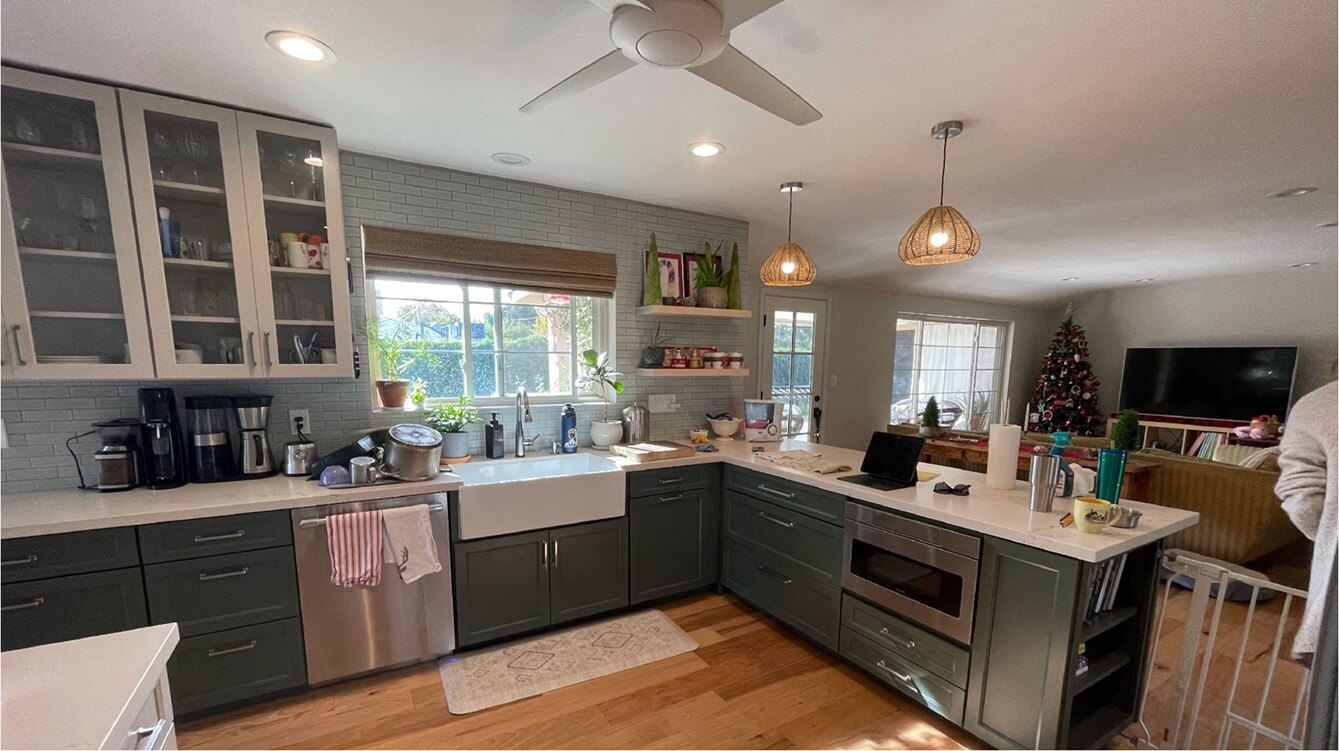

Introduction to Today’s Kitchen
A modern kitchen is far more than a place for cooking—it’s the social hub of the home, a space for creativity, and a reflection of personal style. The shift toward open-concept living has transformed kitchens into multifunctional environments that balance aesthetics with practical use. Designing an efficient kitchen means understanding how materials, layout, and appliances work together to create a smooth daily experience.
Key Principles of Effective Kitchen Design
1. Choosing the Right Kitchen Layout
The layout sets the foundation for usability. Each home has unique needs, but a few configurations stand out for efficiency and comfort.
Popular Layout Types
- L-Shaped Kitchen: Ideal for medium to large spaces; offers an open feel with flexible appliance placement.
- U-Shaped Kitchen: Maximizes counter space and storage; great for families that cook often.
- Galley Kitchen: Perfect for compact spaces; focuses on straight-line efficiency.
- Island Kitchen: Adds workspace and social interaction, often acting as the centerpiece of modern homes.
2. The Work Triangle and Workflow Zones
The classic work triangle links the sink, stove, and refrigerator to minimize walking distance. Many contemporary homes also adopt task zones such as:
- Prep Zone
- Cooking Zone
- Cleaning Zone
- Storage Zone
These zones help streamline the cooking process and reduce clutter.
Materials That Define a Modern Kitchen
3. Countertop Materials
Durability and appearance play major roles in selecting countertops.
Common Choices
- Quartz: Non-porous, low maintenance, and available in many colors.
- Granite: Natural beauty with excellent heat resistance.
- Marble: Elegant and luxurious, ideal for light-use areas.
- Butcher Block: Warm and inviting; great for prep zones.
4. Cabinetry and Storage
Smart storage is the backbone of a neat kitchen. Consider:
- Soft-close drawers
- Pull-out shelves
- Corner carousels
- Vertical pantry systems
Choose cabinet materials such as solid wood, high-quality MDF, or plywood for long-term durability.
Lighting: A Crucial Design Element
5. Layered Lighting Strategy
A bright, well-lit kitchen improves safety and ambiance. A balanced lighting plan includes:
- Ambient Lighting: Ceiling fixtures to illuminate overall space.
- Task Lighting: Under-cabinet lights for cooking and food prep.
- Accent Lighting: Decorative lights to highlight cabinetry or architectural features.
Choosing Kitchen Appliances
6. Smart and Energy-Efficient Appliances
Technology has reshaped kitchens with features like:
- Touchscreen ovens
- Smart refrigerators
- Induction cooktops
- Energy-saving dishwashers
Look for Energy Star–rated models to reduce electricity costs without sacrificing performance.
Enhancing Storage and Organization
7. Effective Organization Techniques
A clutter-free kitchen is easier to use and maintain.
Useful Additions
- Drawer organizers
- Built-in spice racks
- Pull-out trash bins
- Deep drawers for pots and pans
Color and Style Choices
8. Popular Kitchen Styles
Homeowners today gravitate toward styles that blend simplicity and sophistication.
Trending Designs
- Minimalist: Clean lines, neutral shades, and hidden appliances
- Rustic Modern: Wood textures balanced with sleek finishes
- Scandinavian: Bright, airy, and functional
- Transitional: A blend of classic and contemporary elements
Safety and Maintenance Tips
9. Maintaining a Healthy Kitchen
Keeping surfaces sanitized and equipment properly serviced ensures longevity and hygiene.
Key Practices
- Regularly clean ventilation filters
- Use cutting boards to protect counters
- Seal natural stone periodically
- Inspect plumbing and fixtures for leaks
Conclusion
A well-designed kitchen is a harmony of function, durability, and style. Whether you’re renovating or building from scratch, focusing on layout, material quality, lighting, and organization will create a space that enhances your lifestyle and adds long-term value to your home.
FAQs
1. What is the most efficient kitchen layout for small spaces?
Galley and L-shaped layouts typically offer the best efficiency for limited areas.
2. How do I choose between quartz and granite countertops?
Quartz requires less maintenance, while granite offers more natural variation and heat resistance.
3. Are kitchen islands necessary?
Not all kitchens need an island, but they add valuable prep space and storage when room permits.
4. What lighting type is most important in a kitchen?
Task lighting is essential for safe food preparation and cooking.
5. How often should I replace kitchen appliances?
Most appliances last between 8–15 years, depending on usage and maintenance.
6. What is the benefit of soft-close cabinets?
They reduce noise, prevent slamming, and extend the life of hinges and drawers.
7. Should open shelving be used in modern kitchens?
Open shelves can enhance style and accessibility but require consistent organization.
If you’d like, I can also generate versions tailored to rustic, luxury, minimalist, or Scandinavian kitchen themes.
Comments are closed.